Seventy percent of workers’ compensation carriers that have invested in AI have not achieved the outcomes they were looking for. That’s an implementation problem. And the difference between the organizations getting results and those still waiting for them is not about which vendor they chose or how much they spent, rather what they did after the contract was signed.
The Expectation Gap
AI vendors are, understandably, in the business of selling optimism. The demos look clean. The use cases are compelling. The ROI projections are built on best-case assumptions. Then the tool goes live inside a real operation with messy data, legacy system dependencies, workflows that haven’t changed in a decade, and a team that wasn’t part of the buying decision. It doesn’t take long before a significant gap between the pitch and the reality becomes apparent.
This isn’t unique to workers’ comp. It’s a pattern across every industry that has invested heavily in AI before figuring out what the operation needs. But in workers’ comp, where the cost of a poorly managed claim compounds over months and years, the stakes for getting this right are especially high.
Three Reasons AI Investments Underperform
The data foundation isn’t ready.
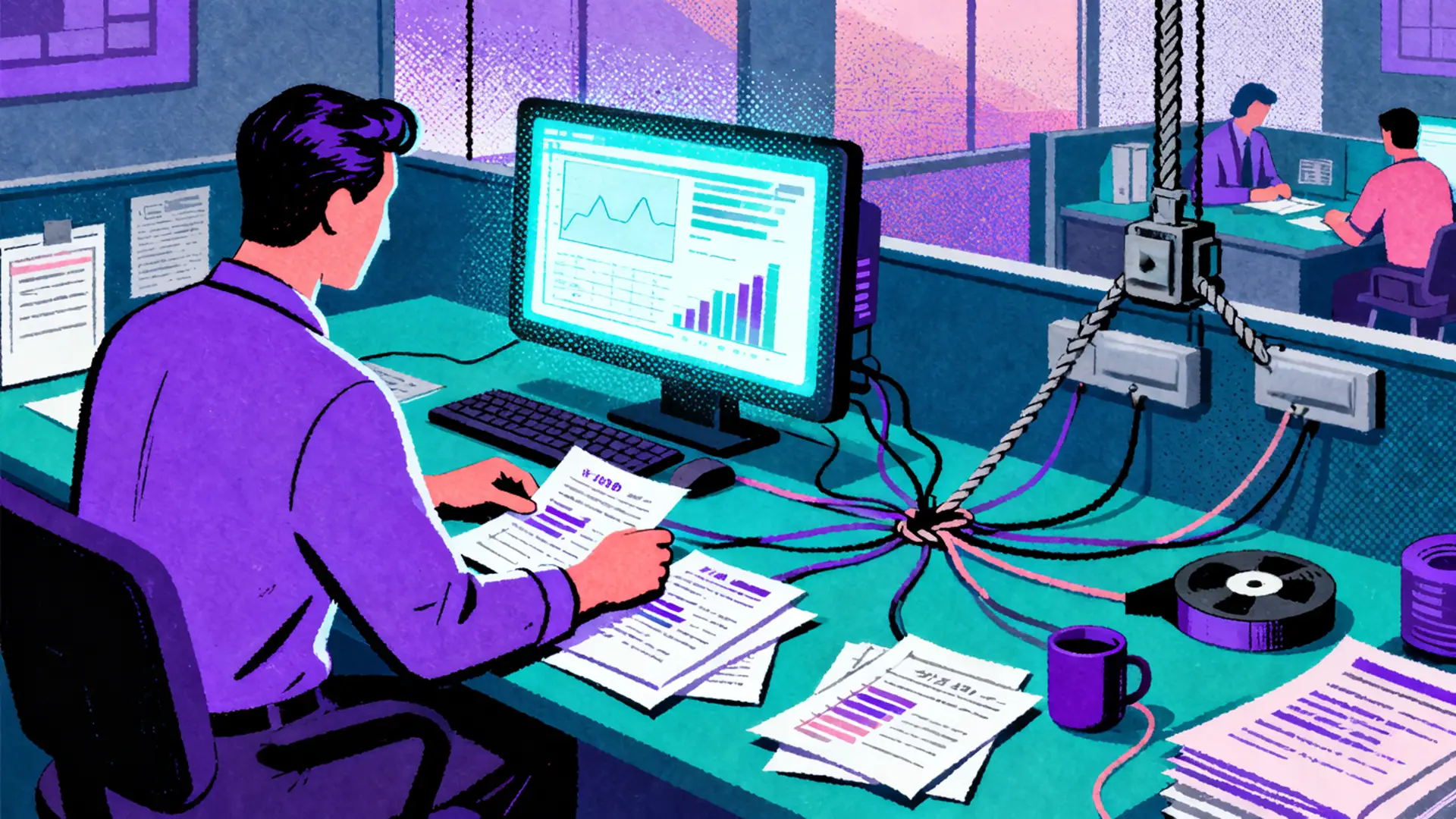
AI systems are only as good as the data they work with. In workers’ comp, that data is often fragmented across disconnected systems like claims platforms that don’t talk to payroll, medical bill review tools that operate independently, and reporting that runs on manual exports. When an AI tool can’t access clean, integrated, real-time data, its outputs reflect that. Garbage in, garbage out is real.
The workflow wasn’t redesigned around it.
Dropping an AI tool into an existing workflow and expecting it to improve outcomes is like adding a GPS to a road with no signage and calling it a navigation system. The tool can only help if the process around it is built to use what it produces. That means rethinking how work flows, where decisions get made, and what the AI’s output triggers, not just adding a new step to the old process.
Adoption was assumed, not earned.
The adjusters, nurse case managers, and examiners who use these tools every day were often not part of the decision to implement them. When AI is introduced as a top-down mandate rather than a tool that clearly makes their job easier, adoption suffers. And low adoption is the most common reason a technically sound AI implementation produces no measurable result.
How to Get it Right
The 30% of organizations seeing real returns from AI investments share some consistent traits. They started with a clear, specific problem. Instead of “we want to use AI,” think “we want to reduce the time adjusters spend on initial claim documentation by 40%.” They built on infrastructure capable of supporting integration, involved the people closest to the work in the implementation, and measured outcomes against that original problem instead of a vendor’s promise.
Early AI adopters in claims processing have reported up to 50% faster processing times and operational cost reductions in the range of 20–50%, according to a 2025 Boston Consulting Group analysis. Those results are real, but they only happen when the carrier or TPA puts as much thought into implementation as it puts into selection.
Understanding the Work of Workers' Comp
Ironically, one of the most important factors to a successful technology partnership often doesn’t show up in vendor evaluations. That’s whether the team on the other side of the table understands workers’ comp. Not just the software. The work itself.
Sources
- Risk & Insurance: Generative AI Reshapes Workers’ Compensation
- Digital Insurance: AI Is Accelerating Digital Transformation
- True Insurtech: Harnessing the Power of Big Data to Fuel Growth in Workers’ Comp
- McKinsey & Company: Insurance 2030 — The Impact of AI on the Future of Insurance
- Boston Consulting Group: AI in Insurance — cited in Digital Insurance, AI Is Accelerating Digital Transformation
