Pilot Purgatory: Why So Many Workers’ Comp AI Projects Go Nowhere
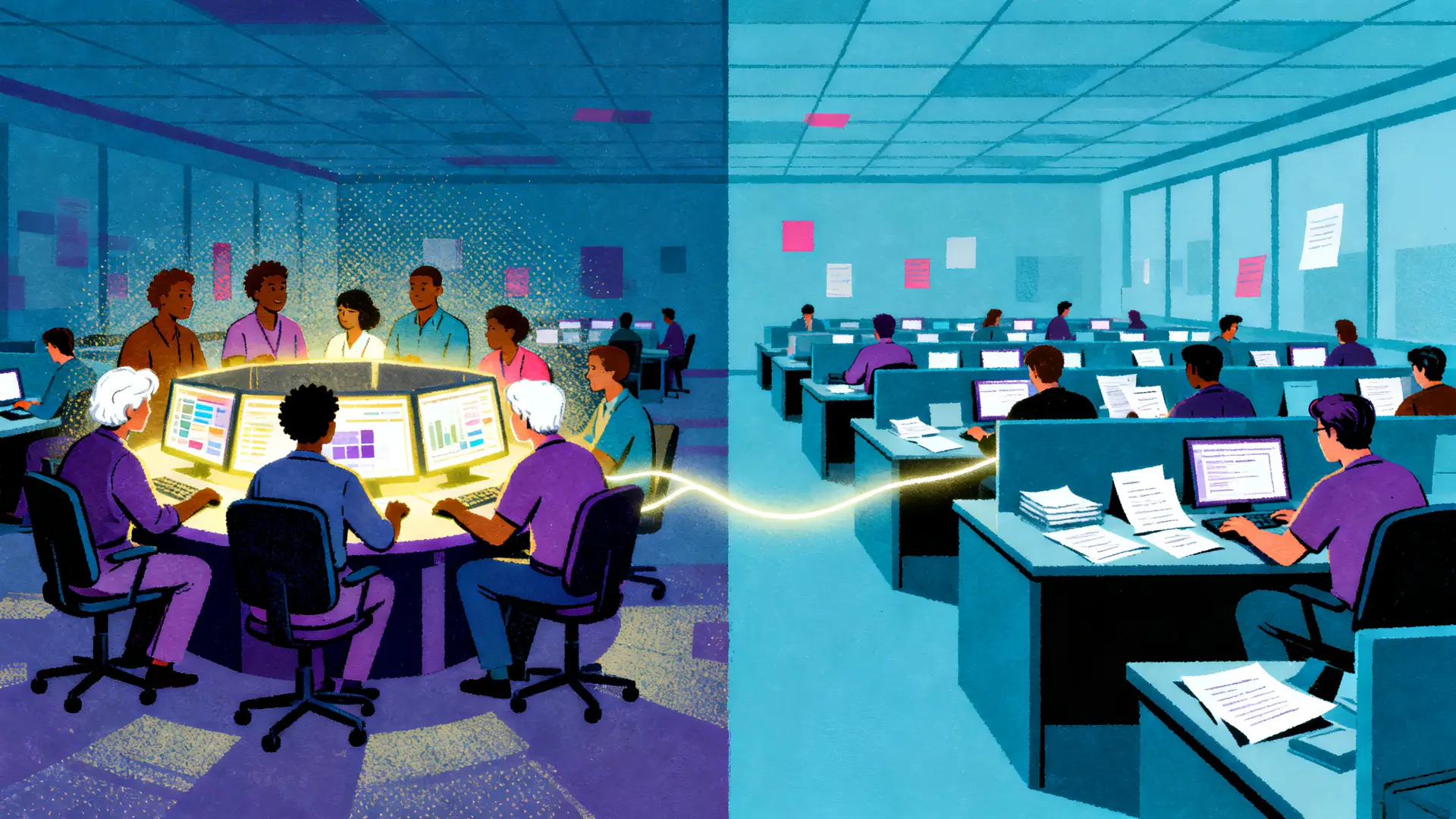
Illustration of a workers' compensation office split into two contrasting zones — on the left, a small group huddles around a glowing central workstation buzzing with energy and data; on the right, a large open floor of workers processing paper documents manually, with a single luminous thread stretching between the two sides but failing to fully connect them.

By now, most workers’ compensation organizations have run an AI pilot. A meaningful number produced results that looked promising. And then nothing happened. Only 30% of carriers have achieved desired benefits from their AI investments to date, and the technology isn’t the problem. Here’s what actually is, and how the organizations escaping pilot purgatory are doing it differently.


What “AI Embedded in the Workflow” Actually Means in Workers’ Comp

Illustration of a busy claims operation where workers at connected workstations review documents and screens with AI-surfaced flags and alerts already visible in their workflow, while glowing data threads move automatically between stations, representing seamless AI integration across the full claims lifecycle.

The phrase gets used constantly: AI embedded in the workflow. But what does it look like on a Tuesday morning in a claims operation? And how is it different from just having AI available somewhere in the system? The distinction matters more than it might seem, and it’s one of the clearest predictors of whether an AI investment delivers or disappoints.

AI Isn’t Replacing Your Team. It’s Deciding What They Spend Their Day On.

Illustration of a worker at a desk with a laptop, glowing data threads connecting to an AI-powered display, while colleagues collaborate in the background across a multi-room office environment, representing how AI supports and redirects human work rather than replacing it.

Generative AI is not coming for your adjusters’ jobs, but it is going to change what those jobs look like. The real question isn’t whether AI will reshape your team’s day-to-day. It will. The question is whether you’re going to use it to free your best people to do their best work or leave them buried in tasks a computer could handle better anyway.

Workers’ Comp AI Investment: Why Aren’t You Seeing the Return?

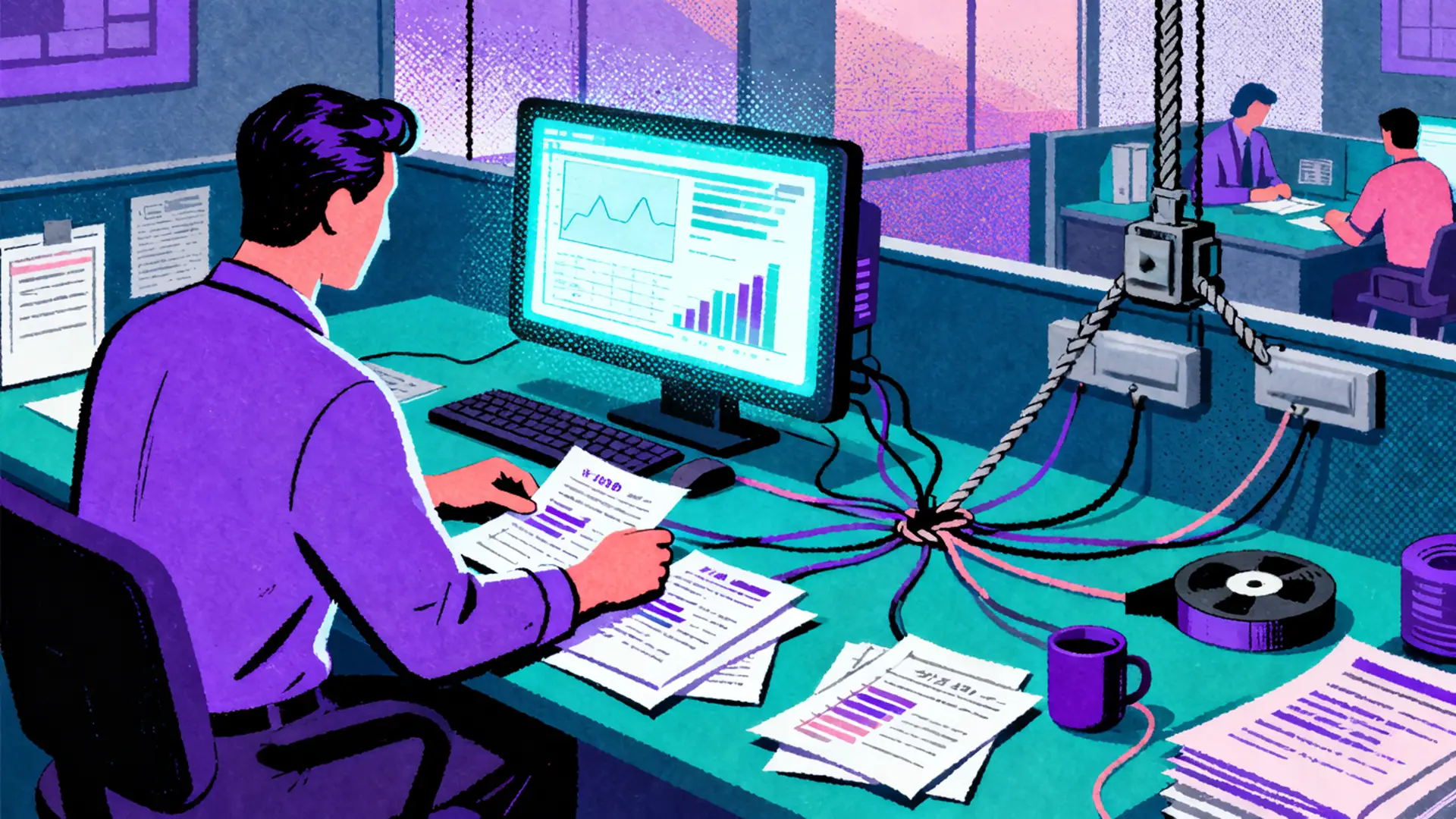
Illustration of a claims professional reviewing paper documents at a desk beside a glowing computer screen, while tangled cords and disconnected cables pile up nearby, representing fragmented systems and the gap between AI investment and operational impact.

Seventy percent of workers’ compensation carriers that have invested in AI have not achieved the outcomes they were looking for. That’s not a technology problem. It’s an implementation one. The difference between the organizations getting real returns and those still waiting usually comes down to three things: their data foundation, their workflow design, and whether their people adopted the tools.

Navigating the Regulatory Maze: AI Compliance in Workers’ Comp

`Illustration of a suited figure walking away from the viewer through a narrow corridor of towering document-covered walls, representing the complexity of AI compliance navigation in workers' compensation insurance.

If you’re implementing AI in workers’ compensation and not thinking about regulation, you’re already behind. State AI insurance laws are hardening fast. Here’s what compliance looks like in 2026 and how to build a defensible governance framework.

The New AI Blueprint for Fighting Workers’ Comp Fraud

Illustration of many uniform blue dots with one marked by a pink X, symbolizing how AI identifies an anomalous workers’ comp claim within a large dataset.

Workers’ compensation fraud continues to evolve, and so do the tools used to stop it. This blog breaks down how AI-driven fraud detection is helping insurers uncover hidden patterns, accelerate investigations, reduce false positives, and strengthen overall outcomes through smarter, more precise detection.

Smarter AI Investments in Workers’ Comp: A Leadership Guide to True ROI

Download the 2025 State of AI in Workers’ Compensation report to explore key trends, real-world use cases, and what insurance leaders should prioritize next.

AI in workers’ comp isn’t about hype, it’s about value. This guide breaks down real-world ROI timelines, total cost of ownership, and how True’s integrated solutions help leaders invest smarter.

AI in Workers’ Compensation: Key Insights from 2025 and What Comes Next

Digital illustration of AI-enhanced workers’ comp intelligence visualizing claims, risk, fraud, and safety data—supporting 2025 trends in automation, analytics, and underwriting precision.

Artificial intelligence is already reshaping workers’ compensation—from claims and fraud detection to safety and underwriting. This blog breaks down the most impactful trends from 2025 and reveals where insurance leaders should focus next to gain strategic advantage in 2026.

The Human Advantage: How Data Automation Helps Policy Admin Professionals Thrive

A close-up of a professional’s face with glowing orange data and code reflections overlaying their glasses, symbolizing the integration of human expertise and technology. The image conveys empowerment, innovation, and the role of data automation in enhancing human potential in policy administration.

Explore how integrating data and automation enhances the accuracy and efficiency of policy administration in the insurance industry. Discover the latest technological advancements and their impact on streamlining operations.