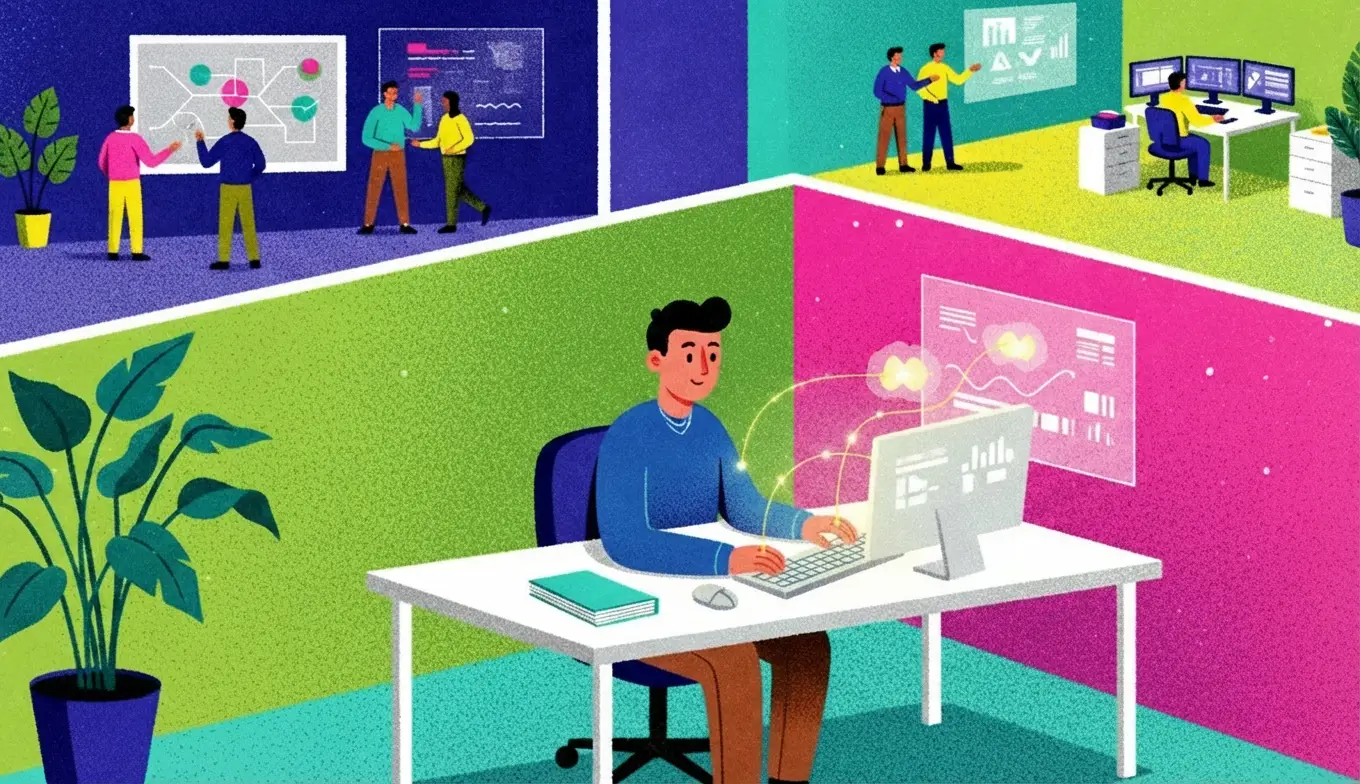
There’s a conversation happening at nearly every carrier, TPA, and self-insured group right now. It usually starts the same way: “We’re looking at AI.” And it almost always runs into the same wall: “But what does that mean for our people?”
It’s the right question. And it deserves a straight answer.
AI, specifically generative AI applied to claims management, is not coming for your adjusters’ jobs, but it is going to change what those jobs look like. And if you’re leading a workers’ comp operation, understanding that distinction is the difference between a workforce that embraces this technology and one that resists it.
The Real Problem: Where Does the Time Go?
Ask any experienced adjuster where their day goes, and you’ll hear the same things. Reading through lengthy claim files to find the three sentences that matter. Manually extracting information from medical records. Chasing down documentation that should have been auto populated. Routing forms. Validating data that a system should have caught.
None of that is why they got into this field. And none of it requires the expertise, judgment, and human empathy that makes a great adjuster great.
GenAI is exceptionally good at exactly those tasks. It can synthesize a 200-page medical record and surface the relevant findings in seconds. It can read an injury narrative and flag inconsistencies. It can cross-reference treatment against fee schedules without a human doing it line by line. It can draft correspondence and route documentation without anyone touching a keyboard.
What it cannot do is sit across from an injured worker who is scared, in pain, and unsure what happens next. It cannot build trust with an employer trying to navigate their first serious claim. It cannot apply twenty years of institutional knowledge to a claim that doesn’t fit the pattern. That’s still human work. It will stay human work.
Supporting Expertise, Not Replacing It
One of the most significant things generative AI does in a claims context is capture and replicate the expertise of your most experienced people. These are your knowledge workers, veterans who know what a claim is going to look like in six months just from how it reads on day three. That knowledge has historically walked out the door at retirement. AI can help preserve it, scale it, and make it available to everyone on the team.
Think of it less like automation and more like giving every adjuster on your staff a highly capable research assistant who never sleeps, never gets behind on their queue, and never misses a detail buried in page 47 of a medical report.
What This Means for Your Insurance Operations
When AI handles the administrative burden, your experienced adjusters receive the gift of time. Time to focus on the complex cases that need them. Time to build the relationships that drive return-to-work outcomes. Time to apply the empathy and judgment that no model will ever replicate.
That’s not just better for claim outcomes. It’s better for the people doing this work. Burnout in claims is real, and it’s driven significantly by the weight of administrative tasks that feel disconnected from the reason most people chose this profession. Reducing that burden is an investment in the workforce, not a threat to it.
The workers’ comp industry has been in the building up to a full-blown talent crisis for years. No doubt driven in no small part by experienced professionals retiring faster than they can be replaced. AI doesn’t solve that problem by eliminating positions. It solves it by making the positions that remain more sustainable, more rewarding, and more focused on the work that matters. For more on that dynamic, True’s look at the insurance talent crisis and the future of employee experience in workers’ comp are worth a read.
The question isn’t whether AI will change your team’s day-to-day. It will. The question is whether you’re going to use it to free your best people to do their best work or leave them buried in tasks a machine could have handled.
Ready to put AI to work for your team? Connect with Ryan Smith, Senior Solutions Advisor, to see how True helps insurers implement AI that preserves institutional knowledge, reduces burnout, and frees your best people to focus on the work that actually moves claims forward.
Sources
- True Insurtech Solutions: A Brief History of the Insurance Talent Crisis
- True Insurtech Solutions: The ROI of Employee Wellbeing
- True Insurtech Solutions: Employee Experience and the Future of Work in Workers’ Comp
- Insurance Thought Leadership: Reimagining Workers’ Compensation in the Age of Generative AI
- Risk & Insurance: Generative AI Reshapes Workers’ Compensation
