The Economy and Workers’ Comp: Why Macro Trends Hit Closer to Home Than You Think

Conceptual collage of a hand gripping rising blue and purple arrows as a dark arrow snaps downward and a pink arrow falls, illustrating economic uncertainty.

Workers’ comp is priced off payroll and shaped by employment patterns. When the economy shifts, carriers feel it — sometimes immediately, sometimes with a lag. Here’s how to read macro trends before they hit your book.

Workers’ Comp AI Investment: Why Aren’t You Seeing the Return?

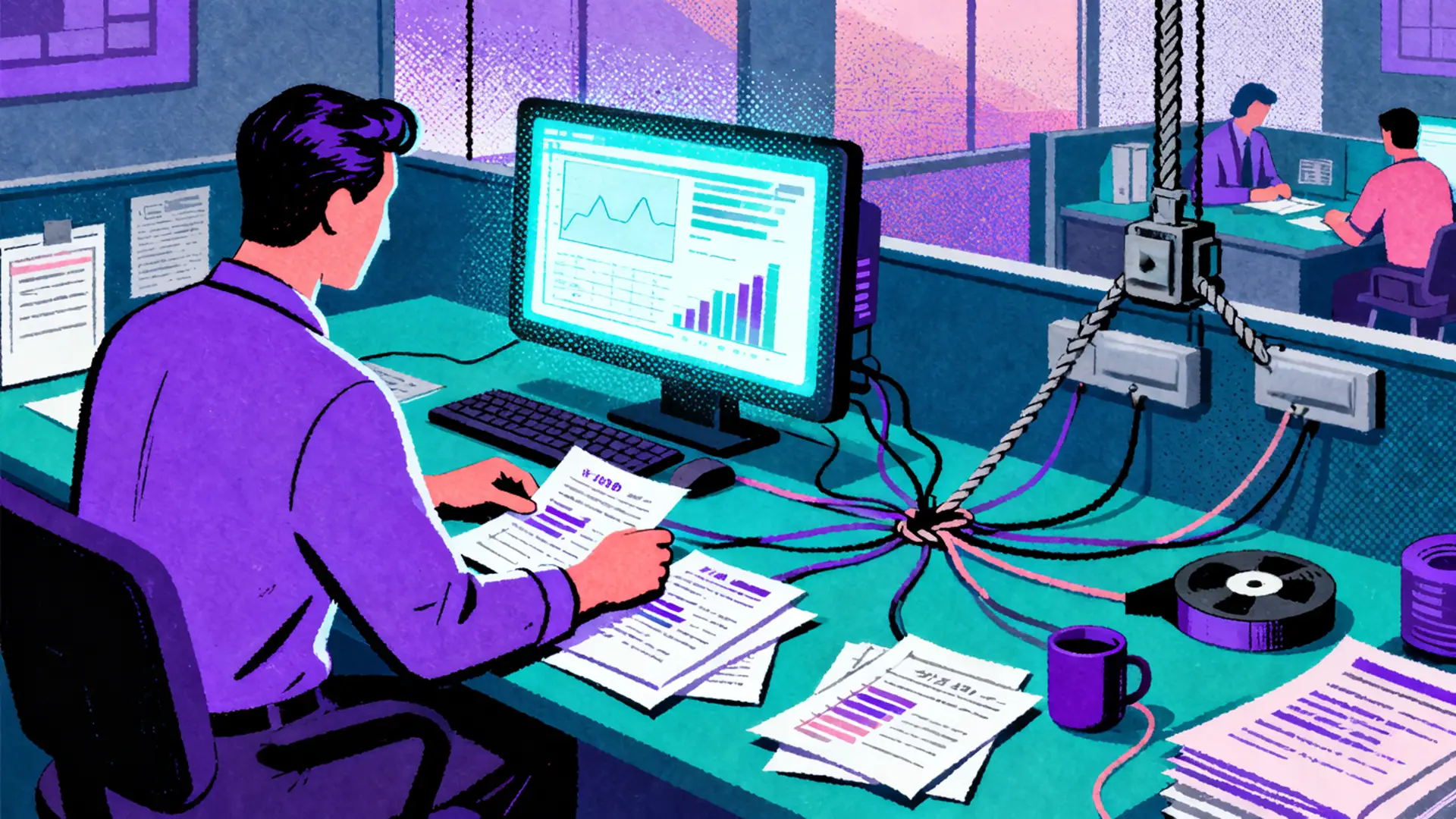
Illustration of a claims professional reviewing paper documents at a desk beside a glowing computer screen, while tangled cords and disconnected cables pile up nearby, representing fragmented systems and the gap between AI investment and operational impact.

Seventy percent of workers’ compensation carriers that have invested in AI have not achieved the outcomes they were looking for. That’s not a technology problem. It’s an implementation one. The difference between the organizations getting real returns and those still waiting usually comes down to three things: their data foundation, their workflow design, and whether their people adopted the tools.

Navigating the Regulatory Maze: AI Compliance in Workers’ Comp

`Illustration of a suited figure walking away from the viewer through a narrow corridor of towering document-covered walls, representing the complexity of AI compliance navigation in workers' compensation insurance.

If you’re implementing AI in workers’ compensation and not thinking about regulation, you’re already behind. State AI insurance laws are hardening fast. Here’s what compliance looks like in 2026 and how to build a defensible governance framework.

True at AIS 2026: Meet Ryan Smith in Orlando

Meet Ryan Smith, True Insurtech Solutions Senior Solutions Advisor, at the 2026 NCCI Annual Insights Symposium in Orlando, Florida, May 11 - 13, 2026

True’s Senior Solutions Advisor Ryan Smith will be attending NCCI’s Annual Insights Symposium 2026 in Orlando May 11-13. Find out what we’re focused on and how to schedule time to connect at the event.

Your People Aren’t the Problem. Here’s How to Make Them Your Biggest AI Advantage.

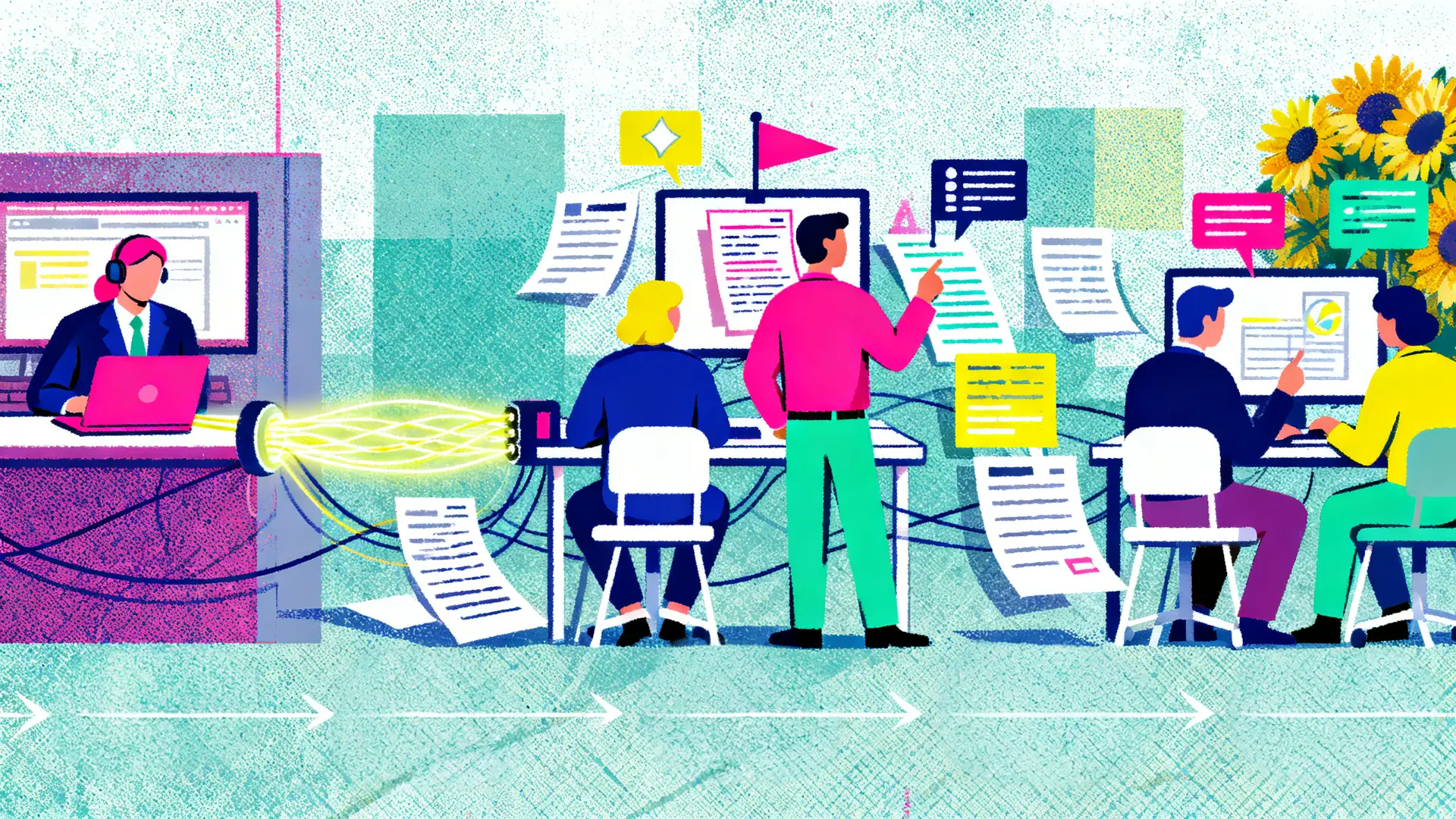
A crystalline AI hand passes an origami heart folded from blueprint paper to an open human hand, symbolizing human-AI partnership and workforce support in workers' compensation operations.

AI isn’t coming to replace your workers’ comp operations team, but it is going to change what every role on that team looks like, and the organizations that manage that transition well will outperform those that don’t. This is a practical guide to evolving roles, building the skills that matter, and creating the culture that makes human-AI partnership work in workers’ comp.

10 Workers’ Compensation Technology Trends Every Executive Should Watch in 2026

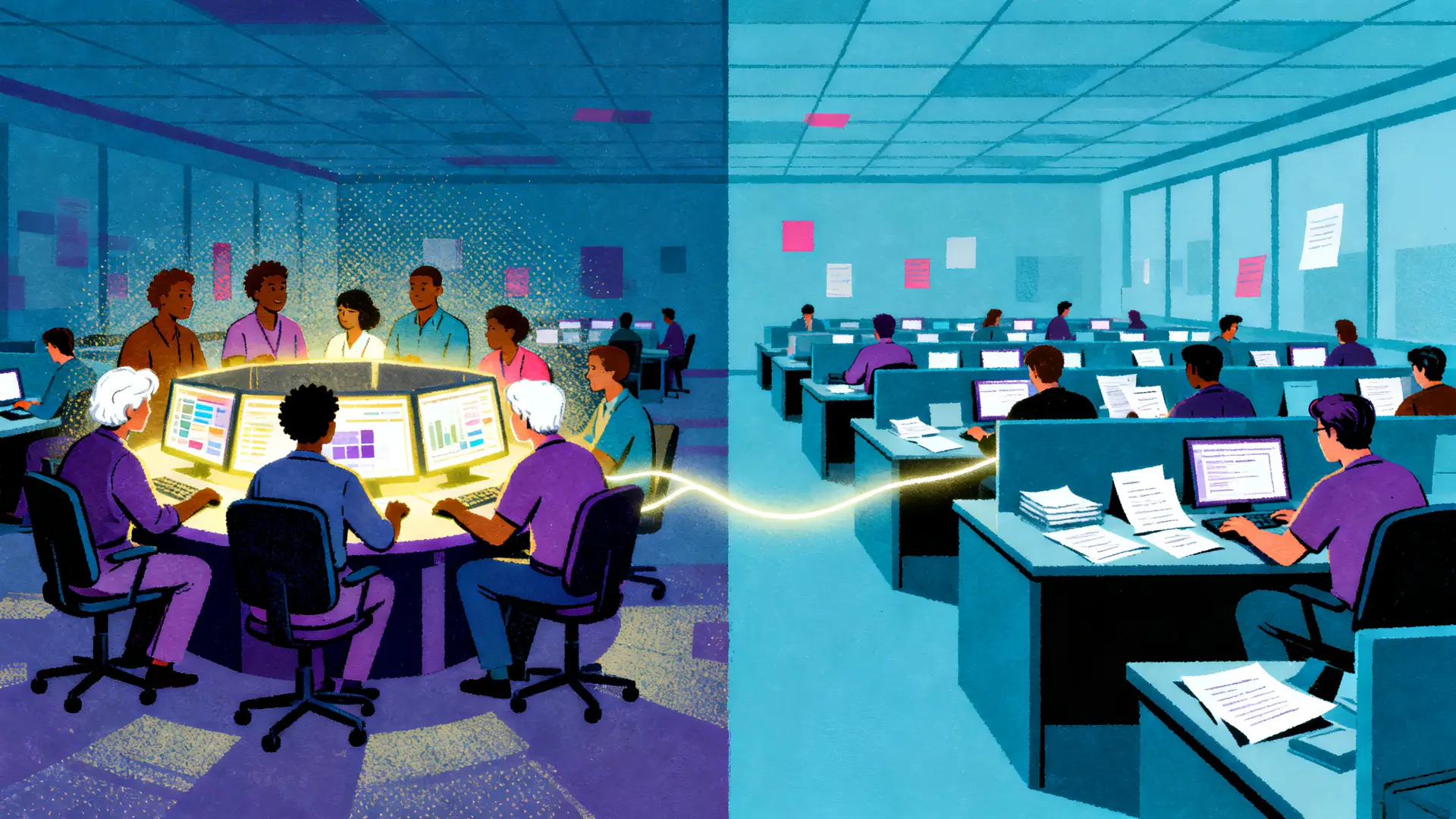
Illustrated workplace panorama showing a warehouse, medical clinic, and office environment connected by flowing data lines, representing the convergence of technology across the workers' compensation industry.

Workers’ compensation is changing faster than most executives realize, and the insurers that thrive in 2026 will be the ones investing in technology to work smarter, move faster, and deliver better outcomes for injured workers. From generative AI and predictive analytics to cloud-native platforms and behavioral health integration, here are the ten technology trends every workers’ comp executive should understand right now.

The New AI Blueprint for Fighting Workers’ Comp Fraud

Illustration of many uniform blue dots with one marked by a pink X, symbolizing how AI identifies an anomalous workers’ comp claim within a large dataset.

Workers’ compensation fraud continues to evolve, and so do the tools used to stop it. This blog breaks down how AI-driven fraud detection is helping insurers uncover hidden patterns, accelerate investigations, reduce false positives, and strengthen overall outcomes through smarter, more precise detection.

Smarter AI Investments in Workers’ Comp: A Leadership Guide to True ROI

Download the 2025 State of AI in Workers’ Compensation report to explore key trends, real-world use cases, and what insurance leaders should prioritize next.

AI in workers’ comp isn’t about hype, it’s about value. This guide breaks down real-world ROI timelines, total cost of ownership, and how True’s integrated solutions help leaders invest smarter.

AI in Workers’ Compensation: Key Insights from 2025 and What Comes Next

Digital illustration of AI-enhanced workers’ comp intelligence visualizing claims, risk, fraud, and safety data—supporting 2025 trends in automation, analytics, and underwriting precision.

Artificial intelligence is already reshaping workers’ compensation—from claims and fraud detection to safety and underwriting. This blog breaks down the most impactful trends from 2025 and reveals where insurance leaders should focus next to gain strategic advantage in 2026.

Avoiding Compliance Fines—How Insurers Can Stay Ahead

A close-up of a professional’s hands typing on a laptop, with futuristic digital compliance icons hovering above. The icons include a secure checkmark, a checklist, a handshake, a construction worker, a training symbol, and a warning sign, representing automated compliance workflows and regulatory adherence in insurance and workers’ compensation. The image conveys a modern, technology-driven approach to ensuring compliance and avoiding fines.

Failing to comply with workers’ compensation data reporting can lead to hefty fines and regulatory risks. This guide explores common pitfalls and strategies insurers can use to prevent costly compliance errors.

Preparing for Medical Data Call Reporting: What Insurers Need to Know

A doctor in a white coat with a stethoscope around their neck holds a tablet displaying digital medical records. Three glowing, semi-transparent icons representing medical forms, checklists, and healthcare data float above the tablet, symbolizing medical data collection, compliance, and digital reporting.

Medical Data Call (MDC) reporting is essential for compliance and analytics in workers’ compensation as more insurers are required to participate. The NCCI Data Now 2025 notes challenges insurers face, including data integration and accuracy. By enhancing data capabilities and automation, insurers can streamline submissions, mitigate compliance risks, and gain competitive advantages.

Unit Statistical Reporting Continues to Be a Challenge—How Insurers Can Adapt

A glowing blue maze symbolizing the complexity and challenges of unit statistical reporting in the insurance industry. The illuminated pathways represent the intricate data requirements and compliance hurdles insurers face.

Unit Statistical Reporting (USR) is vital for workers’ compensation insurers, affecting e-mod calculations and compliance. Insurers face challenges like data accuracy and submission timeliness, risking penalties and inefficiencies. The article discusses enhancing data quality, automating reporting, and staying informed on regulations to mitigate risks and transform USR challenges into competitive advantages.

More Carriers Must Report Indemnity & Medical Data—What It Means for Insurers

Digital tablet with a stethoscope symbolizing medical data reporting and compliance.

As workers’ compensation reporting evolves, insurers will need to submit more detailed indemnity and medical data, impacting underwriting and claims management. Compliance is essential to avoid penalties and improve outcomes. Insurers can gain advantages by adapting quickly, utilizing automation, and ensuring data accuracy for effective risk management and competitive positioning.

Why Centralized Data is Essential for Effective Risk Management in Insurance

Digital illustration representing centralized data systems in insurance risk management.

This blog explores the importance of centralized data in risk management, highlighting how unified systems enhance the ability to identify, assess, and manage risks in insurance.