
Workers’ compensation is changing faster than most executives realize. While claim frequency continues declining in traditional sectors, severity is rising. Medical costs now account for most claim expenses and show no signs of slowing. Meanwhile, an aging workforce means experienced claims adjusters are retiring faster than they can be replaced.
These pressures have become operational headaches that are reshaping the economics of workers’ comp from the ground up. The organizations that will thrive in 2026 are those actively investing in technology to work smarter, move faster, and deliver better outcomes for injured workers. Here are the ten trends every workers’ comp executive should understand right now.
1. Generative AI for Claims Management

What this means: While predictive AI tells you what’s likely to happen, generative AI does something more ambitious by creating. Generative AI systems are being deployed across the claims lifecycle for automated analysis, document processing, and intelligent decision support. Unlike rule-based automation, GenAI synthesizes complex inputs and generates real-time recommendations, much like a highly experienced adjuster would (just faster and at scale).
Why it matters: 93% of carriers cite medical cost inflation as their greatest profitability threat. GenAI addresses this directly by capturing and replicating veteran adjuster expertise, automating document review, and synthesizing complex medical records to surface interventions human adjusters might otherwise miss. This technology doesn’t replace that adjuster, rather provides them faster, clearer information so their expertise, judgment, and instincts can do what they do best.
The catch? Only 30% of carriers have achieved desired benefits from AI investments to date. The difference between those that do and those that don’t comes down to one thing: moving from isolated pilots to AI embedded in actual workflows.
2. Predictive Analytics for Claims Triage
What this means: Predictive analytics uses machine learning models to forecast claim outcomes early in the lifecycle, including projected severity, recovery timelines, litigation risk, and fraud likelihood. These systems analyze historical patterns across thousands of claims to prioritize adjuster resources and flag where early intervention is most likely to change the outcome.
Why it matters: Claims are becoming harder to read. Frequency is declining in manufacturing but rising in healthcare and logistics, and the mix of claim types is shifting in ways that make experience-based gut instinct less reliable. Predictive models help identify high-risk claims before they become catastrophic, and they’re most powerful when paired with GenAI as one forecasts what’s likely to happen, while the other helps figure out what to do about it. The most successful workers’ comp operations in 2026 will use both together.

3. Smart PPE and IoT for Hazard Detection
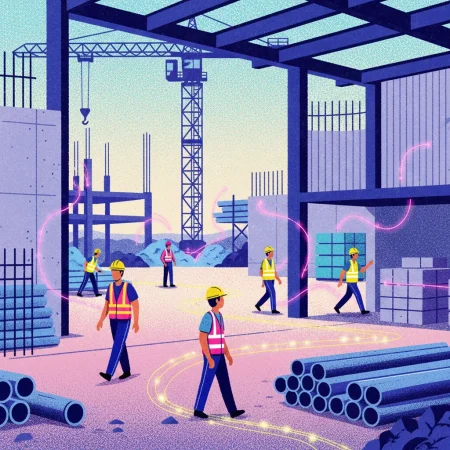
What this means: Internet of Things (IoT) devices embedded in personal protective equipment (PPE) monitor workplace hazards, worker movements, and environmental conditions in real time. This includes smart hardhats with gas sensors, reflective vests with vital sign monitors, and movement-tracking wearables that detect ergonomic risk before an injury occurs.
Why it matters: The industry is actively moving from reactive response to proactive prevention, and the data is beginning to support the investment. Recent pilot studies show a 50% reduction in claim frequency at sites using smart cameras versus control sites, and one manufacturer using wearables achieved a 62% reduction in injury rates. The honest caveat is that employee privacy concerns and data storage requirements continue to limit adoption outside high-risk industries. But for carriers and self-insured groups in construction, manufacturing, and logistics, this remains a trend worth watching closely.
4. Cloud-Native Workers’ Comp Platforms
What this means: Cloud-native platforms are modern workers’ comp systems built from the ground up on microservices architecture. This means each function (policy, claims, billing, reporting) operates as an independent service that can be updated or scaled without touching everything else. Critically, these platforms are designed with real-time integrations to HR, payroll, ERP, and medical systems baked in, not added on. They replace legacy on-prem systems that create data silos, require costly maintenance, and can’t keep pace with regulatory or operational change.
Why it matters: Legacy systems are a liability in more ways than one. They prevent real-time integration with payroll and HR, which creates compliance risk and operational delays. They require expensive IT resources just to maintain the status quo. And increasingly, they can’t support the AI and automation capabilities that are quickly becoming table stakes. Cloud platforms flip that equation with 24/7 access, automatic synchronization, faster deployment, and a foundation that can reliably support the tools covered throughout this list. For workers’ comp organizations still running on legacy infrastructure, this is the foundational investment that makes everything else possible.
5. Cybersecurity and Data Governance

What this means: Cybersecurity in the workers’ comp context means comprehensive infrastructure and compliance automation to protect sensitive worker health data, prevent breaches, and satisfy evolving privacy regulations such as GDPR, CCPA, and a growing body of AI-specific regulation. Data governance refers to the policies, processes, and controls that determine how data is collected, stored, accessed, and used across the organization.
Why it matters: Workers’ comp systems sit on some of the most sensitive data in the enterprise: injury details, medical records, wage information, and personally identifiable information for injured workers. That makes them a high-value target and the threat landscape is getting more sophisticated fast. Wiley’s 2026 cyber risk analysis identifies AI-powered attacks like prompt injection, data poisoning, and generative AI-enhanced phishing as among the most significant emerging threats, with frequency spiking and no market wide insurance response yet in place.
On the regulatory side, CCPA amendments that took effect January 1, 2026, now require mandatory annual cybersecurity audits for companies doing business in California, with an executive required to attest to completion under penalty of perjury. For workers’ comp organizations operating across multiple states, this is the new baseline, and other states are watching California’s lead. Phishing-resistant MFA, endpoint detection, and zero-trust architecture are now table stakes for maintaining cyber coverage and demonstrating the kind of security posture regulators and insurers increasingly require.
6. Telemedicine Integration
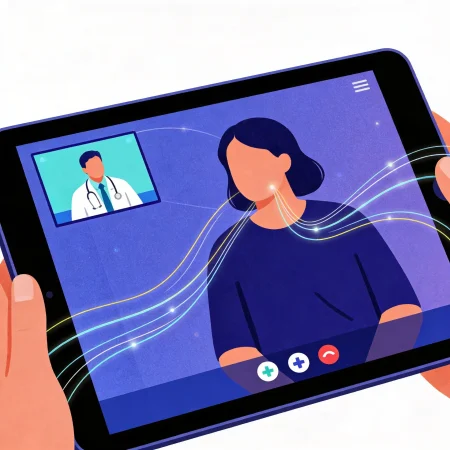
What this means: Telemedicine in workers’ comp refers to remote medical services and consultations delivered via video, phone, or secure messaging for injured workers, including virtual initial medical exams, independent medical exams via telehealth, and behavioral health support integrated directly into the claims workflow. What began as a pandemic-era workaround has matured into a permanent, purpose-built care delivery channel.
Why it matters: Medical provider shortages are real, especially in rural areas, and they translate directly into treatment delays that extend claim duration and drive costs. Telehealth expands provider access without the geography constraint. Medicare telehealth flexibilities received a significant runway extension through December 31, 2027, giving carriers, TPAs, and self-insured groups more time to build out telehealth infrastructure with greater regulatory confidence. While some flexibilities remain temporary, the extension signals continued federal commitment to telehealth access and reduces near-term uncertainty for organizations building long-term virtual care strategies.
7. Behavioral Health Integration
What this means: Behavioral health integration in workers’ compensation refers to the systematic identification and management of psychosocial barriers (such as fear of re-injury, depression, anxiety, and poor recovery expectations) that impede physical recovery and drive claim costs. Modern claims platforms now embed psychosocial risk screening, behavioral health provider networks, and early intervention workflows directly into the claims lifecycle, giving carriers, TPAs, and self-insured organizations the tools to flag at-risk claims and act before they become long-tail problems.
Industry research establishes that psychosocial factors, not just physical injury severity, are primary determinants of claim outcomes. The 2024 Workers’ Compensation Research Institute (WCRI) study found that injured workers facing elevated psychosocial risk — including fear of re-injury, poor recovery expectations, low social support, depression, and anxiety — had poorer functional outcomes and required significantly longer periods of disability compared to workers without these barriers, even when injuries were otherwise medically comparable.
Why it matters: The cost impact is substantial. Workers’ comp patients with psychosocial risk factors consistently take longer to return to work and face worse functional outcomes than those without them, a finding reinforced by both WCRI research and industry reporting from Claims Journal. A disproportionate share of claim costs come from a relatively small fraction of psychologically complex cases, and the financial burden compounds quickly: depression and anxiety amplify pain perception, reduce treatment adherence, and prolong recovery timelines, directly translating to higher claim duration and costs.
8. Robotic Process Automation (RPA) & Intelligent Automation
What this means: Robotic Process Automation uses software robots to handle repetitive, rules-based tasks like data entry, form validation, document processing, eligibility checks, claims routing, and payment processing without human involvement. When combined with AI, it becomes intelligent automation capable of handling not just structured tasks, but complex decisions that would traditionally require adjuster judgment.
Why it matters: Workers’ comp operations remain heavily burdened by manual administrative work. McKinsey projects that more than half of claims activities will be replaced by automation by 2030, which says a lot about how manual-heavy most operations still are today. RPA addresses that gap directly, freeing experienced adjusters to focus on the complex decisions and human relationships that demand them.

The industry is actively shifting from automation as a cost-cutting measure to automation as a growth strategy. According to a 2025 Boston Consulting Group report cited by Digital Insurance, AI implementations have already delivered up to 50% faster claims processing and reduced operational costs by 20–50% for early adopters. For workers’ comp organizations still running manual-heavy processes, the gap between leaders and laggards is widening fast.
9. Natural Language Processing for Document Intelligence

What this means: Natural language processing (NLP) is a branch of AI that enables computers to read, interpret, and extract meaning from human language, including the kind of messy, narrative-heavy text that makes up the bulk of workers’ compensation documentation. In practice, that means claim forms, adjuster notes, medical reports, emails, and policy documents. NLP capabilities include document classification, information extraction, and automated summarization. It’s the technology that allows a system to “read” an injury narrative and flag it for potential fraud or scan a medical report and extract the relevant diagnosis codes without a human doing it line by line.
Why it matters: According to McKinsey, roughly 90% of enterprise data is unstructured, and in workers’ compensation, that problem is especially acute.
Claim files are built on narrative (injury descriptions, treatment notes, provider correspondence, and adjuster observations) that traditional systems can’t efficiently search or analyze. The volume of that data far exceeds what any claims team can manually process at scale. NLP changes that equation by enabling automated claims intake, fraud detection through narrative analysis, medical review automation, and bill validation against fee schedules for Labor Code compliance.
Virtual assistants powered by NLP can also provide 24/7 support for injured workers, reducing call volume for adjusters and keeping return-to-work communication moving without adding headcount. And to be clear, that’s not about reducing it either. The goal isn’t to replace the claims professional, the nurse case manager, or the adjuster who’s spent years building the judgment and empathy this work demands. It’s to free them from the tedious, time-consuming tasks that have nothing to do with why they got into this field so they can spend more time doing the work that moves the needle for injured workers, employers, and their own professional satisfaction.
10. API-Driven Integration and Ecosystem Partnerships
What this means: An API (Application Programming Interface) is the connective tissue that allows different software systems to share data with each other in real time, securely and automatically, without manual intervention. In a workers’ comp context, that means your claims system, policy administration platform, HR and payroll systems, medical bill review tools, ERP, and third-party service providers can all exchange data seamlessly rather than operating as isolated silos. API-first architecture means this capability is built into the platform’s foundation, not bolted on as an afterthought when someone realizes two systems don’t talk to each other.
Why it matters: A single claim can touch HR, payroll, medical providers, legal, and finance, often simultaneously. When those systems don’t communicate, consequences like duplicate data entry, conflicting records, compliance gaps, and claims decisions made on incomplete information, are predictable. As Risk & Insurance recently reported, siloed systems prevent organizations from seeing “the total impacts across the claim continuum”. This is an addressable blind spot that directly affects outcomes and costs.

For C-suite leaders, the strategic case goes beyond operational efficiency. Insurers with mature API programs can onboard new partners, vendors, and capabilities far faster than those still managing point-to-point integrations or batch file transfers. That speed translates to competitive advantage, faster product development, and broader ecosystem partnerships. Operationally and logistically, established API programs open the door to best-in-class tools (from AI-powered medical bill review, predictive analytics, or RTW management platforms) without a full-scale systems overhaul.
The Bottom Line
These ten trends aren’t happening in isolation. They’re converging, and the organizations building infrastructure today that can support AI, automation, integrated data, and ecosystem connectivity are the ones that will be positioned to move when the market moves. The ones still patching legacy systems and running manual processes will be spending their energy catching up instead of pulling ahead.
 The shift underway in workers’ compensation is from institutional and reactive to intelligent and worker centric. That means embedding AI into workflows rather than running isolated pilots. It means making data trustworthy and accessible across the claim continuum. It means treating the injured worker’s experience as an outcome metric, not an afterthought. And it means building systems flexible enough to adapt as this industry continues to change…because it will.
The executives who get this right in 2026 won’t be the ones who bought the flashiest technology. They’ll be the ones who understood what their operations needed, chose partners who understood workers’ comp as well as they understand software, and made thoughtful investments that compound over time. That’s not a trend. That’s just good strategy.
Not every trend on this list is the right investment for every insurer. Connect with Ryan Smith, Senior Solutions Advisor, to talk through where your insurance operation stands and where technology can make the most impact.
